Why Source Backed AI Answers Matter
Learn why source backed AI answers help support teams reply faster, stay accurate, and build customer trust using approved business knowledge.
Plexvia Insight Team7 min read
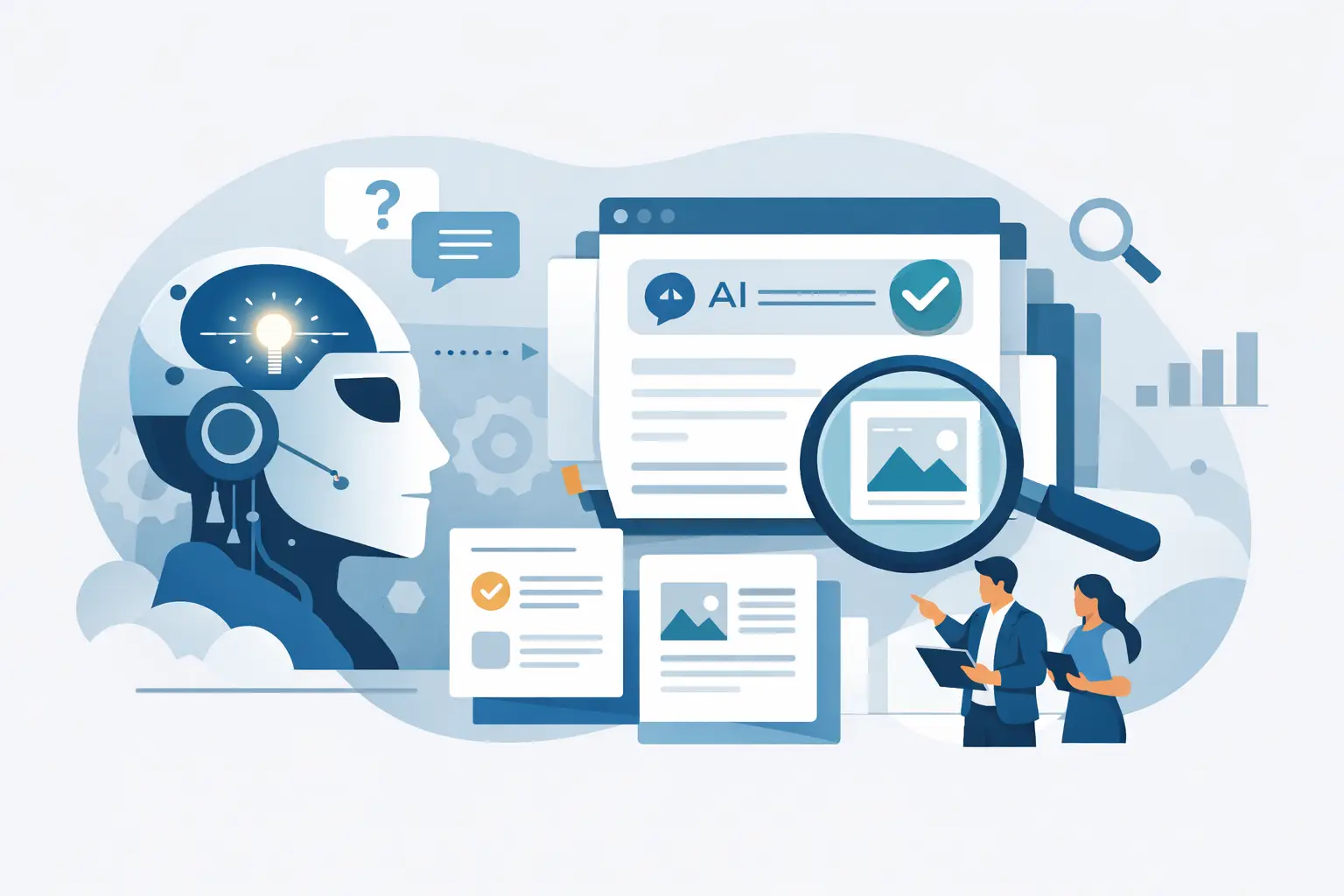
A customer asks whether an exchange is still allowed after 30 days. Your team has answered that question a hundred times, but the policy changed last month. If AI pulls from old habits instead of your current rules, the reply goes out fast and wrong. That is the real case for source backed AI answers: speed only helps when the answer is tied to approved information your business actually trusts.
For small support teams, front-desk staff, and growing service businesses, that distinction matters every day. Most customer questions are not hard because they are complex. They are hard because the right answer lives somewhere inconvenient - an inbox thread, a PDF, a saved doc, a manager's memory, or a website page that has not been updated in every place. AI can reduce that friction, but only if it is grounded in the sources your team uses to run the business.
What source backed AI answers actually mean
Source backed AI answers are responses generated from specific business materials rather than from the model's general training alone. Those materials might include help center articles, policy documents, internal process notes, product details, pricing rules, or approved snippets your team maintains.
That sounds simple, but the difference is substantial. A generic AI answer is based on what the model thinks is likely to be true. A source-backed answer is based on what your business has approved as true. For customer communication, that is the difference between sounding helpful and being reliable.
This matters most in the messy middle of support work. A customer might ask whether a booking can be moved without a fee, whether a specific item qualifies for replacement, or whether a location is open on a holiday. These are not abstract questions. They depend on your rules, your exceptions, and sometimes even one location versus another.
Why generic AI falls short in customer support
Generic AI is good at phrasing. It is not always good at policy.
That trade-off gets overlooked because many demos look impressive. Ask a broad question, get a polished response, and it seems like the problem is solved. But customer-facing teams live with the edge cases. The customer who mentions a prior refund. The parent asking about a size exchange after removing tags. The patient trying to confirm office hours during a storm advisory. In those moments, confident wording is not enough.
When AI answers without a clear source, a few problems show up quickly. First, responses can drift. Two customers ask the same question in different words and get different answers. Second, teams lose trust. Once staff notice even a few shaky responses, they stop relying on the tool. Third, managers end up reviewing more, not less, because they cannot tell what the AI based its answer on.
That last point is easy to underestimate. If your team cannot see where an answer came from, they have to verify everything manually. You have not removed work. You have just moved it.
Source backed AI answers create operational trust
Operational trust is what makes automation usable. Not exciting. Usable.
When an answer is grounded in approved sources, the team has something concrete to work with. They can review the suggestion, confirm it matches policy, and send it with confidence. If the policy changes, updating the source improves future answers. If a mistake slips through, there is a clear place to fix it.
This changes how teams experience AI. Instead of wondering whether the draft is inventing something, they can focus on whether it fits the situation and tone. That is a much better use of human judgment.
It also improves consistency across channels. The customer who asks in website chat should not get one policy, while the customer who emails gets another. Source-backed systems help teams answer from the same business knowledge whether the conversation starts on chat, email, or inside a shared inbox.
Where source backed AI answers help most
The best use cases are usually high-volume questions with real business rules behind them.
Think about exchanges and returns. Customers want quick answers, but those answers often depend on timing, item condition, proof of purchase, and whether a sale item is excluded. A grounded AI system can draft a reply based on the current policy instead of producing a generic return script.
Billing is another clear example. Customers asking why they were charged, when a refund will post, or whether a late fee can be waived are not just looking for a friendly tone. They need a response that aligns with your actual process. If your business has specific steps for invoice disputes or refund timelines, those sources should shape the draft.
Service businesses see the same pattern with scheduling and location-specific questions. One office may accept walk-ins while another requires appointments. One store may carry a product variation that another does not. Source-backed answers can reflect those real operational differences when the underlying knowledge is organized correctly.
Sensitive situations are where the limits matter just as much. If a customer mentions legal action, a safety issue, a threat, or a complex account dispute, automation should not try to carry the conversation alone. Good systems use AI to assist, then escalate to a person based on rules your business controls.
What to look for in a system that claims to be source backed
Not every tool that says it uses your knowledge will produce dependable answers. The details matter.
First, the sources need to be manageable. If updating business information is painful, the knowledge base will drift out of date and accuracy will erode. Second, the AI should make it clear what information it used. Teams need visibility, not mystery. Third, you want control over autonomy. Some teams want AI to draft replies for review. Others are comfortable with automated responses for only a narrow set of low-risk questions.
Guardrails matter too. A good setup can follow tone rules, avoid unsupported claims, and route conversations when confidence is low or the topic is sensitive. That is especially important for small teams, because they do not have time to supervise every message line by line.
This is where platforms like Plexvia fit naturally. The value is not just that AI can write. It is that the writing happens inside a shared workspace where conversations, team context, and approved knowledge all meet. That makes the output easier to trust and the workflow easier to manage.
The trade-off: source quality determines answer quality
Source backed AI answers are not magic. They are only as good as the information you give them.
If your policies are scattered, outdated, or contradictory, the AI will reflect that confusion. In many businesses, this is the real project hiding behind the AI project. Before you can automate answers well, you need a clear source of truth.
The good news is that you do not need perfect documentation on day one. Start with the questions your team answers every week. Returns. Booking changes. Shipping windows. Intake requirements. Cancellation terms. Build from there. As the knowledge gets cleaner, the replies get stronger.
It also helps to decide where you do not want automation. Some businesses should never auto-send billing judgments, complaint responses, or anything involving exceptions without human review. The goal is not maximum automation. The goal is dependable automation.
Why this matters to the customer experience
Customers do not care whether your team used AI. They care whether the answer is clear, correct, and timely.
Source backed AI answers support all three. They reduce wait time because staff are not rewriting the same explanations from scratch. They improve clarity because responses can be drafted in a consistent format and tone. And they improve accuracy because the content comes from approved business information rather than guesswork.
There is a secondary benefit too: less internal stress. When support staff do not have to hunt through old threads or ask a manager the same policy question five times a day, they can focus on the conversations that really need judgment. That makes the work calmer and often better.
AI earns its place in customer communication when it helps teams move faster without losing the thread. Source backed AI answers do that by keeping the business, not the model, in charge of what is true. If you are evaluating AI for support, that is the standard worth holding onto.


